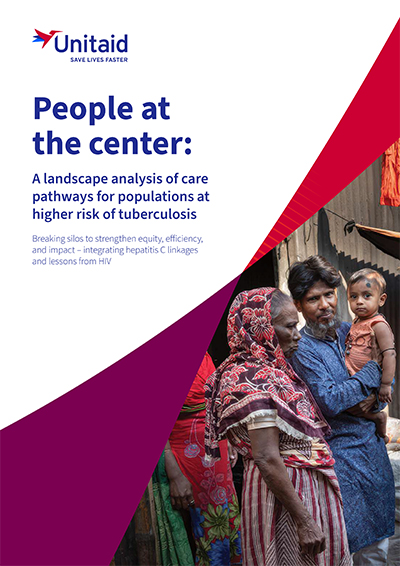
Every year, more than 2 million people with tuberculosis (TB) are not diagnosed. The “missing millions” are concentrated among children, pregnant women, miners, migrants, people in detention, and others facing overlapping vulnerabilities that limit their access to care. Many live or work in densely populated settings where the risk of transmission is high and access to health services is limited.
A new Unitaid report finds that the reason so many people remain undiagnosed and untreated for TB is not a lack of tools, but how health systems are designed. While advanced diagnostics and treatments exist, they often fail to reach the people who need them most. In many countries, TB programs rely on facility-based approaches that don’t reflect how and where the most vulnerable people seek care.
The report shows that some of the biggest gaps in TB care occur before people are even diagnosed. In many high-transmission settings, people with TB symptoms first turn to pharmacies or private clinics, where access to appropriate diagnostics and links to national TB programs are often limited.
“Too many people at highest risk of TB are still being missed - not because we lack the tools, but because health systems are not reaching them where they live and work. Many face overlapping risks and health needs, yet services are too often delivered in silos”, says Cherise Scott, Senior Technical Manager for tuberculosis at Unitaid. “If we are serious about ending TB, we need integrated, people-centered approaches that break down the structural barriers that keep care out of reach.”
The analysis suggests that to accelerate access and increase impact, countries and partners should prioritize integrated, people-centered approaches that bring services closer to communities and better connect public and private providers. This includes focusing on high-risk settings – such as informal settlements, mining communities, migration routes, and prisons – where undiagnosed TB is often concentrated.
By designing TB responses around the populations most often missed, countries can improve access to care, reduce onward transmission, and strengthen the resilience of their health systems.