
Lenacapavir, a twice-yearly injection, represents the most significant advance in HIV prevention in decades. In Zambia, a Unitaid-funded project is redefining HIV prevention with community health workers bringing long-acting injectable protection outside traditional health facilities.
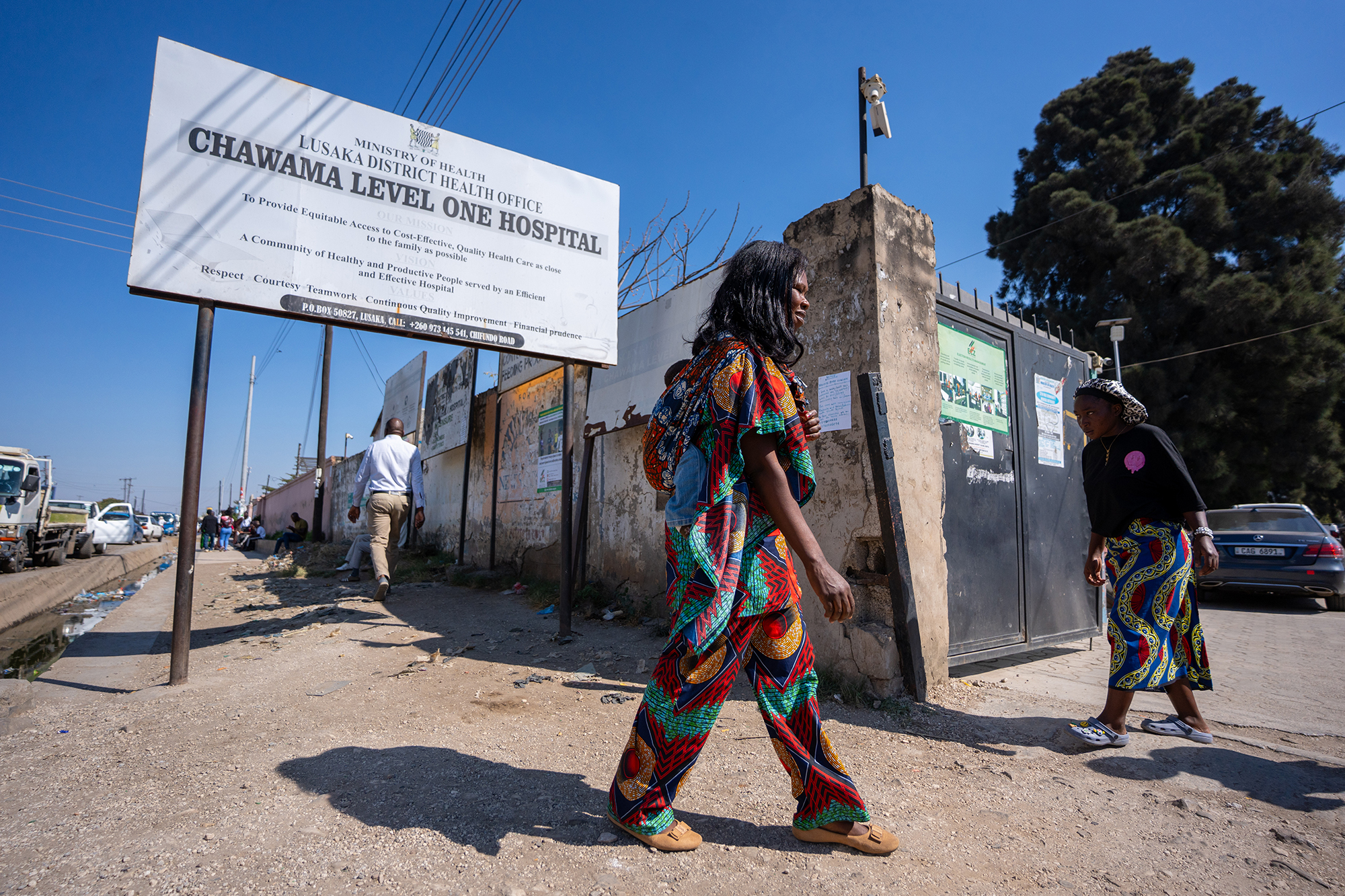
On a busy morning in Chawama, one of Lusaka’s most crowded townships, Hawa Mbewe is not waiting behind a desk for clients to come to her. She is out among the market stalls and along the lanes between houses, looking for the women and young people the health system most often struggles to reach.
As a community-based volunteer, Hawa’s work begins where most clinics stop. Out in community settings, she tests pregnant and breastfeeding mothers, talks with people about how to protect themselves from HIV, and brings them into care. What she is able to offer now is something new: lenacapavir, a long-acting injectable that protects against HIV for six months at a time.
“I meet my clients some in the bars, some in the market, some at their homes,” she says.

For Dr. Adamson Paxon Ndhlovu at the University Teaching Hospital in Lusaka, reaching people outside the clinic is not a matter of convenience. It is the difference between a prevention tool that exists and one that actually reaches the people who need it. The new initiative he manages, SCALE-IT Zambia, is a partnership between Unitaid and Zambia’s Ministry of Health (MoH), implemented by the University Teaching Hospital HIV/AIDS Program (UTH-HAP). It is extending the government’s own efforts to get lenacapavir to the people most at risk, some of whom face stigma and, in some cases, criminalization that can make a clinic visit feel unsafe.
“HIV prevention takes a lot of convincing,” he says. “These are healthy people who may not see the value outright. And when they do go to a facility, they find long queues, because most facilities are congested with people seeking treatment for various diseases. That has been one of the things putting people off.”
Taking these services right into the communities where people live, so people are not put off by transport, long queues or stigma, is really going to help us reach as many people as possible.
Dr. Adamson Paxon Ndhlovu
Project Manager, SCALE-IT Zambia, UTH-HAP, MoH
Given as an injection just twice a year, lenacapavir prevented almost every infection in trials and in 2024 it was named Science magazine’s Breakthrough of the Year. Yet a breakthrough only matters if it reaches people. Across sub-Saharan Africa, adolescent girls and young women account for around a quarter of all new HIV infections, and key populations are disproportionately affected. In Zambia, some 30,000 people still acquire HIV every year.
While the country has come a long way in getting people diagnosed and onto treatment, prevention is where it is still falling behind. “We are already off track,” says Dr. Chimika Phiri, the National HIV Prevention Advisor who also serves as SCALE-IT’s Project Director, pointing to the national target of fewer than 15,000 new infections a year, which the country is on course to miss.
Closing that gap, he says, will take new tools. “We need innovations, and one of these technologies is lenacapavir.”
Unitaid and the MoH, through UTH-HAP, are working to close the gap between that breakthrough and the people it is meant to protect. The project focuses on those the standard health system most often misses: adolescent girls and young people, pregnant and breastfeeding women, and other key and vulnerable populations, among them people who use drugs, truck drivers, sex workers and men who have sex with men. Rather than building a parallel system, it connects the public facilities or ‘hubs’ where the Ministry of Health is rolling out lenacapavir to a network of community and private sector ‘spokes’ that carry the same service out into neighborhoods, markets, universities, truck stops and other places where people gather. The spokes include community health posts, drop-in centers, private clinics, private pharmacies and youth-friendly spaces. As well as carrying prevention out from the hubs into community and private spokes, the project builds it into the routine services people already use, such as antenatal and maternal care, allowing women and their babies to be protected during a visit they were already making.
Why a clinic is not always enough
For many people who could benefit from HIV prevention, the daily pill that has long been the mainstay of prevention is simply hard to keep up. In Zambia, fewer than 15% of people who start oral pre-exposure prophylaxis (PrEP) are still taking it six months later, often worn down by the burden of a daily tablet, by stigma or by the distance to a clinic.
Sarah Chulu, a young woman who uses drugs and lives in Chibolya, a Lusaka community where free medical services are hard to come by, says coming forward for help is rarely simple. She had used the daily oral tablets before and found them easy to forget. “Taking the oral PrEP was a bit more forgetful,” she says. “Most of us have specific schedules we wake up to every day. It is not that you do not want to take it, it just slips your mind.”

The six-month injection changed that calculation for her. “I find it much more convenient, because it is six months. It is longer,” she says. “This is a big weight off my shoulders.”
I feel safe for six months. You get to think about other things, not just that one stress.
Sarah Chulu
Lenacapavir client, Chibolya, Lusaka
Coming forward was her own decision. “I took myself. I know what I want for myself,” she says. “I want to be an example.” Her hope is that the injection will reach others like her who cannot easily get to a clinic. “Often, people who use drugs are left out of the conversation,” she says.
Bringing protection into the community, she believes, would mean fewer people slipping through the gaps, and fewer new infections.
Meeting people where they are
Across 10 districts, the hubs and their first spokes are already in place, and have reached almost 700 people with lenacapavir within a month of services starting.
Carrying the service those last few steps are people like Hawa and Emmanuel Mubanga, a peer promoter who spends his days mobilizing people in markets, at schools and wherever the community meets, explaining what lenacapavir is and why it matters.
“A lot of people prefer to go to the spoke, or somewhere there is no crowd, rather than to the hospital, because of self-stigma,” he says. “They would rather get the same service in the community.”
For the traders he meets, tied to their stalls, the injection also answers a quieter concern. “Before, people were moving around with the pills every day,” he says. “Now they get it once, no one sees it, and they are protected wherever they go.”
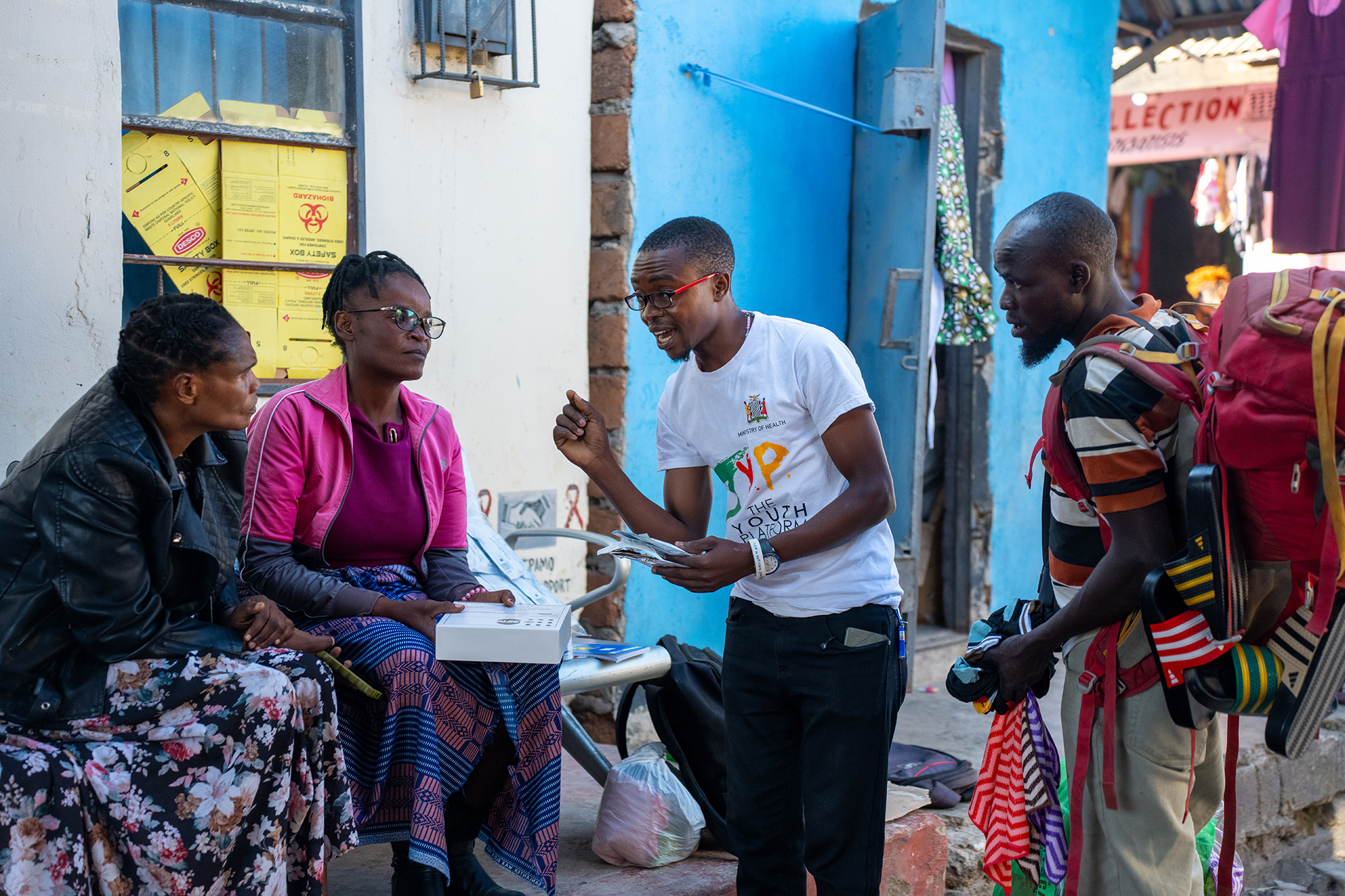
To bring the injection closer to where people live and work, the project is working with community health assistants and peer mobilizers drawn from the very communities they serve: young women, mothers, people living with disabilities, and peers from key populations. Injections are given right in the communities through the spokes, removing the need for a clinic visit.
They would rather get the same service in the community than go to the hospital.
Emmanuel Mubanga
Peer promoter, SCALE-IT Zambia
Young people carry much of the country’s new HIV risk, and for them the appeal of an injection that lasts six months is just as strong, though often for different reasons. In Kapiri Mposhi, a busy transport town in Zambia’s Central Province, Steven Chashinka heard about lenacapavir from community workers who came to the market where he trades.
Being a business person, somebody who moves a lot, I do not think I would have time to take pills. An injection that lasts is very good for me, because I do not have to keep it in mind.
Steven Chashinka
Lenacapavir client, Kapiri Mposhi
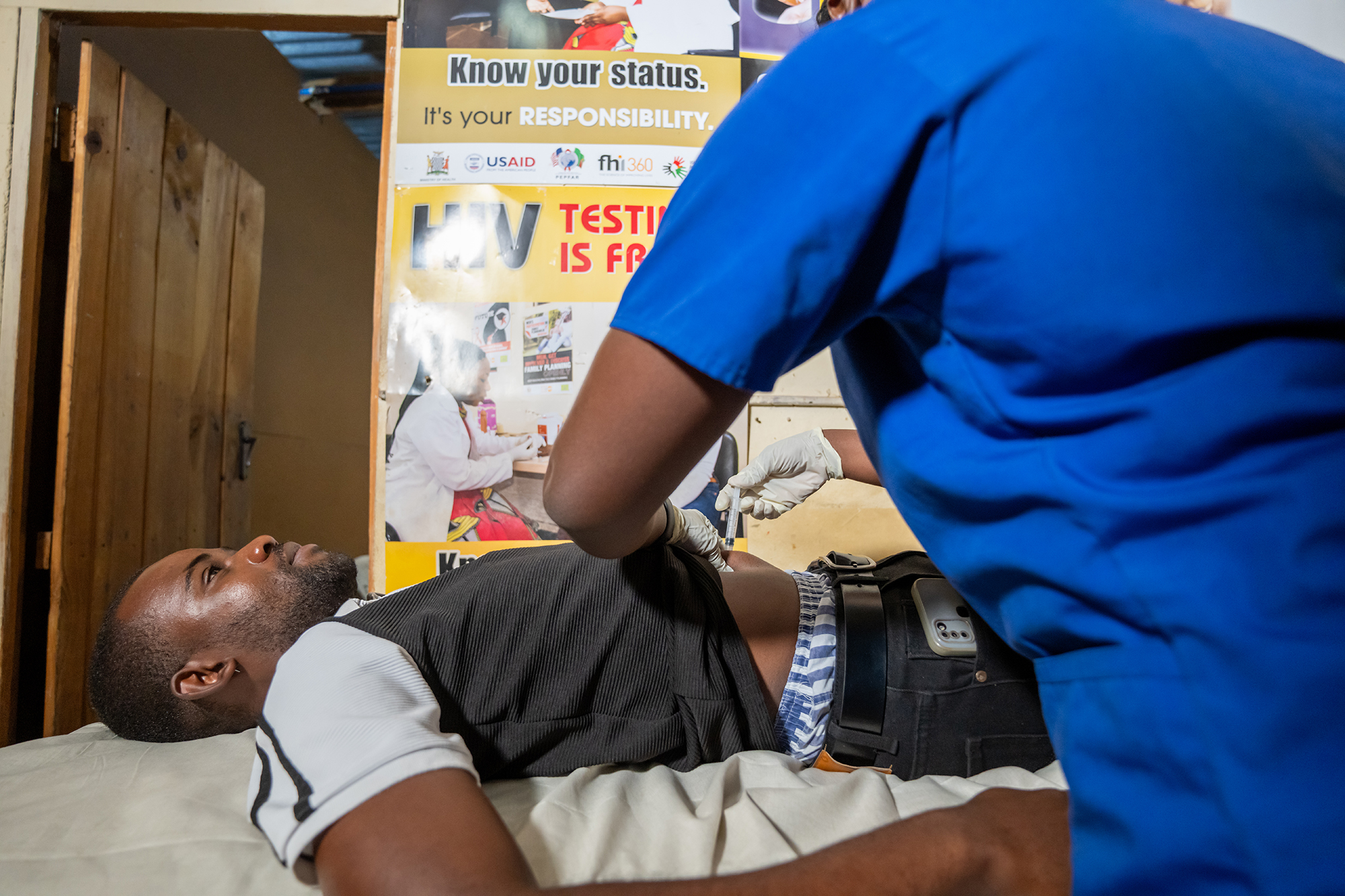
A mother’s choice
Pregnant and breastfeeding women are among the people the project is determined to reach. Rather than asking them to make a separate trip, it integrates HIV prevention into the maternal and child health services they already use. Mentor mothers also provide follow-up closer to where these women live.
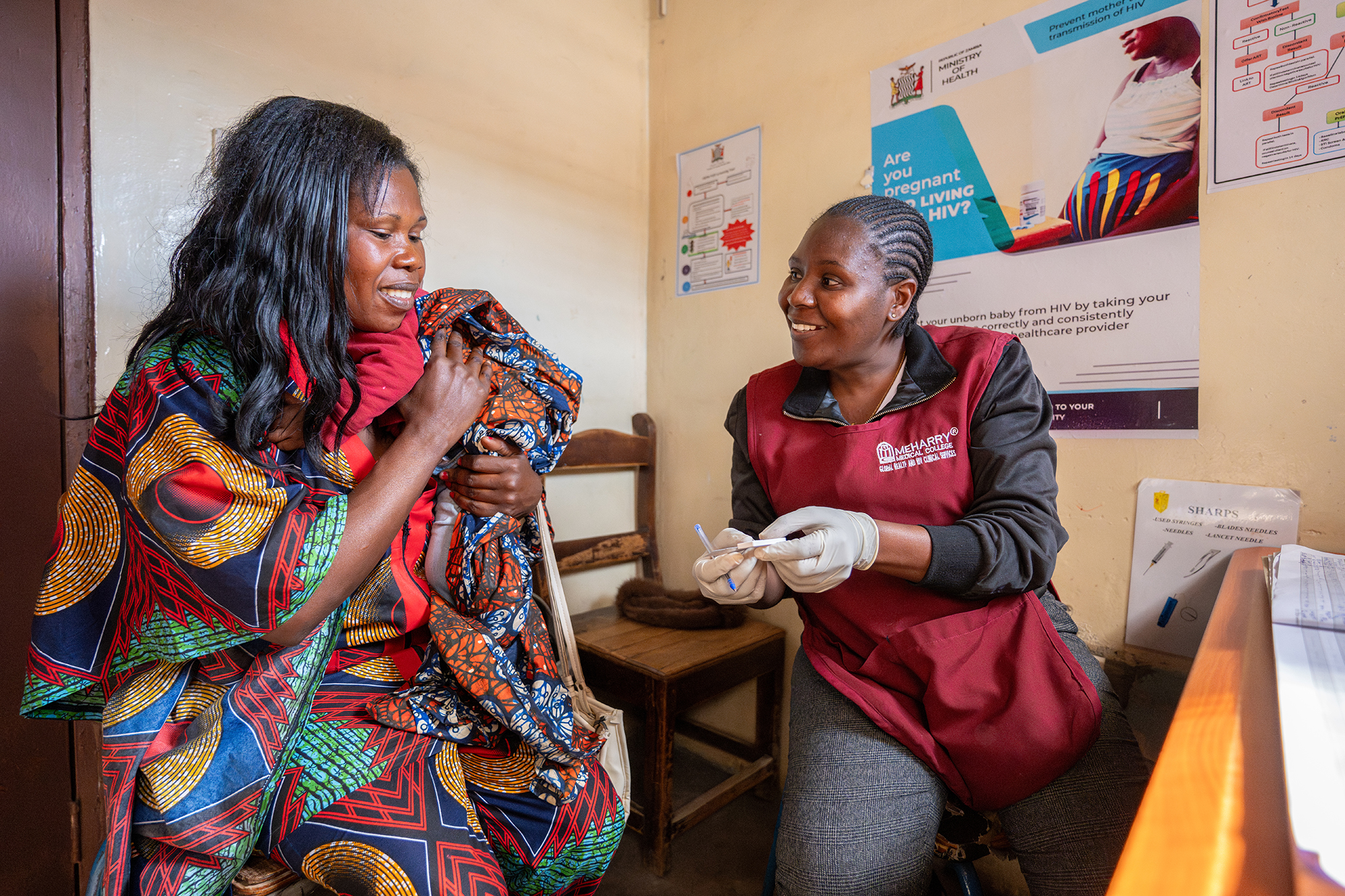
Ellen Kabubi lives in Kuomboka, Chawama, and brings her baby to the maternal and child health department at the hospital. She first heard about PrEP at an antenatal visit, took time to think it over and decided to take part. She started on the daily tablets after her baby was born, then learned at a later appointment that a twice-yearly injection had become available and chose to switch.
For Ellen, the reason was as much medical as practical. Pregnancy and breastfeeding are times when women are more exposed to HIV, and protecting the mother protects the baby too. “When I am pregnant, it is very easy to get sick from my partner,” she says. “When I am taking PrEP, I am protecting myself and my baby.”
The daily tablet was the harder part. “Sometimes you are told to take the pills at eight in the evening, and you get busy with cooking, and it is easy to forget,” she says. The injection took that worry away. She wanted to share the news. “I went home and told my husband, and he was very supportive, and happy that we are protecting our child and my life.”
Built to last
The hub-and-spoke approach is designed not only to reach people now, but to prove what works so that Zambia can take it further. UTH-HAP leads the project from within government, which means the lessons it generates feed directly into national plans. Alongside delivery, the project is measuring what each approach costs and how well it works, so that the Ministry can see which models are worth scaling, and where.
We want to demonstrate that there are cost-effective community delivery models which, if proven effective, can influence policy change and be adopted by government, and even beyond Zambia.
Dr. Chimika Phiri
National HIV Prevention Advisor, Ministry of Health, and Project Director, SCALE-IT Zambia
For Dr. Phiri, the prize could be larger than HIV alone. If the project can show that community health workers are able to safely deliver an injectable like lenacapavir, the same evidence could enable regulations allowing more types of providers to offer such services and make it possible to bring additional care closer to communities too. “The same approach could be used for other disease conditions, be it malaria, TB or others,” he says.
For Dr. Adamson, the months to come are about gathering the evidence to make the case to the world.
“This is one of those truly exciting moments,” he says, “when we are exploring a way of delivering services that has real promise to reach the people who are most vulnerable, and who may never be reached through a clinic alone.” As ministers and advocates gather for the UN High-Level Meeting on HIV on 22 June, Adamson is already clear about what he hopes the project will achieve.
My hope is that we will show the world that reaching people through the hub and spoke approach brings real impact, and that it can become the go-to model for HIV prevention.
Dr. Adamson Paxon Ndhlovu
Project Manager, SCALE-IT Zambia, UTH-HAP, MoH
About SCALE-IT Zambia
SCALE-IT Zambia (Sustainable Community-driven Approaches for Lenacapavir PrEP Expansion with Impact and cost-effectiveness in Zambia) is a three-year, 8.4 million US dollar Unitaid-funded project led by the University Teaching Hospital HIV/AIDS Program, the implementing arm of Zambia’s Ministry of Health, in conjunction with five consortium members including Clinton Health Access Initiative (CHAI), Treatment Literacy and Advocacy Campaign (TALC), New York University (NYU), AIDS Vaccine Advocacy Coalition (AVAC) and University of Zambia School of Public Health (UNZASOPH). Working across 10 districts, it links public facility hubs with community and private-sector spokes to deliver lenacapavir, the twice-yearly injectable for HIV prevention, beyond the clinic. The project aims to reach at least 20,000 people with lenacapavir by 2028 and to generate the evidence on cost-effectiveness, impact and delivery needed to guide scale-up nationally and beyond. A Community Advisory Board, on which key and priority populations are represented, is part of the project’s governance, helping keep it accountable to the people it serves.