
As my term as Chair of Unitaid’s Executive Board draws to a close, I find myself reflecting on the transformation that has taken place – not only within Unitaid, but across global health more broadly. From the COVID-19 disruptions to the ongoing strain on international aid budgets, the global health landscape today looks very different from the one I stepped into in 2019. These shocks have tested the resilience of institutions, exposed deep inequities and reaffirmed the need for innovation, flexibility and partnership.
Throughout this period, I have also witnessed Unitaid’s evolution – from an organization with a strong technical mandate to one that has truly matured, found its place in the global health ecosystem, and made meaningful, catalytic contributions across a wide range of health challenges.
Closing the gaps we already know how to close
If I am asked what the urgent priorities are today, I answer clearly: the preventable emergencies that continue to cost women their lives.
Each year, 26 million women haemorrhage during childbirth – and every two minutes, a woman dies of cervical cancer, a disease we know how to prevent and treat. These deaths persist not because solutions are lacking, but because they have not been made accessible, affordable or acceptable to the women who need them.
This is where Unitaid has stepped forward. Recognizing that our unique model that matches health challenges with innovative solutions could have major impact beyond HIV, TB and malaria, we adapted our efforts to serve women and others left behind by global health responses.
We have invested in diagnostic tools designed for the realities of women’s lives. Our pioneering work in HIV self-testing paved the way for self-sampling in cervical cancer screening, allowing women to take control of their health on their own terms – privately, safely, and without stigma. We have introduced portable, battery-powered treatment devices that replace costly, heavy equipment and make treatment possible in local clinics and outreach settings. Because innovation is meaningful only when it meets people where they are.
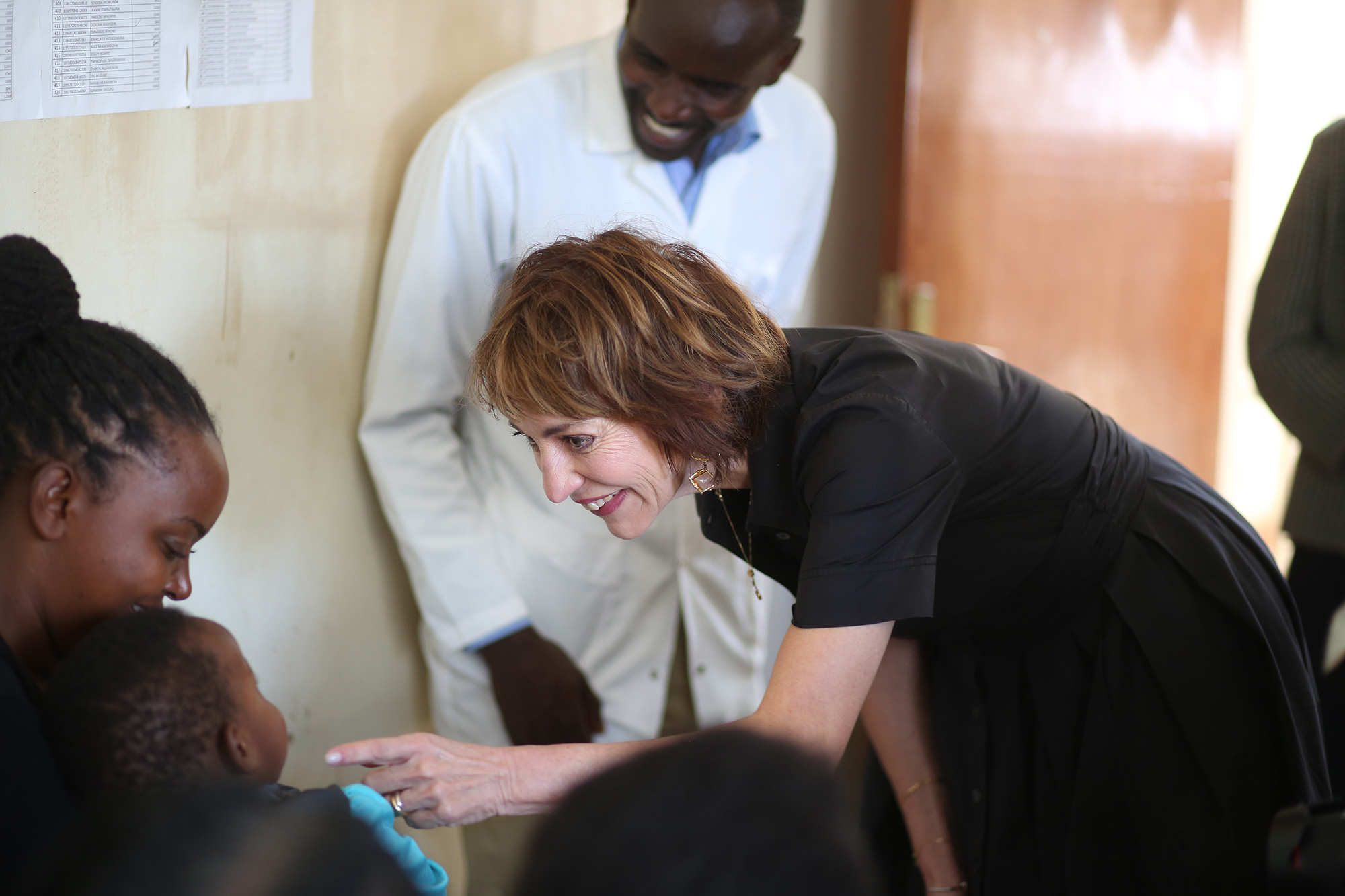
To date, more than 1.6 million women across 14 countries have been screened for cervical cancer through our initiatives. We have secured price reductions that have made HPV testing widely accessible and accelerated self-collection strategies to overcome cultural and practical barriers. And we continue to explore AI-driven screening models that could expand high-quality diagnostics where specialists are scarce.
Meanwhile, we’re advancing a package of tools to prevent, identify and treat life-threatening bleeding in childbirth, and strengthening antenatal care services to protect babies from infectious diseases that can be transmitted during pregnancy, birth or breastfeeding.
These advances are instruments of agency, autonomy and freedom. And it’s just the beginning.
Leading through unprecedented transformation
When I became Chair in 2019, my first priority was strengthening strategic dialogue within the Executive Board. That foundation proved critical when COVID-19 reshaped the global health landscape.
The pandemic exposed deep inequities – but it also revealed Unitaid’s distinctive strengths: agility and innovation, critical in an environment under pressure. We repurposed partnerships, accelerated access to lifesaving tools, and continued driving innovation even as global supply chains faltered and systems were under strain. We helped anchor equity as a core principle of global health governance – now reflected in ongoing discussions on the Pandemic Treaty and in the growing consensus that access must be built into systems, not treated as an afterthought.
Beyond the pandemic, this year’s broader disruptions – from shrinking development assistance to geopolitical tensions – have reinforced the importance of institutions that can act as pathfinders.
Unitaid has played, and must continue to play, this bridging role between innovation and access, between global strategies and the realities faced by countries and communities.
My experience as France’s Minister of Social Affairs, Health and Women’s Rights shaped my approach: linking long-term vision to practical delivery and ensuring that we communicate results clearly and convincingly. Impact must be sustained and showing our results is key to convincing donors to commit to our cause.
Looking Ahead
In 2026, Unitaid will mark its 20th anniversary – and it is a milestone of endurance and evolution. This is no longer a young institution; it is a mature, well-structured organization with a clear identity and a vital role in global health.
Over the past years, I have watched Unitaid deepen its engagement with countries and communities, not as beneficiaries of innovation but as co-creators of it. Our strengthened partnerships with governments have allowed us to better understand national priorities, respond to real-world constraints and shape solutions that are truly fit for the future.
We are working with countries to ensure innovations are not just effective, but cost-effective – tools that help health systems do more on increasingly tight budgets. This means advancing solutions adapted to resource-limited settings, simplifying processes and designing implementation models that integrate smoothly into existing services rather than adding complexity.
We are also contributing to stronger regional ecosystems, building manufacturing capacity and medical oxygen systems so that countries are not only users of innovation, but drivers of it. This shift is essential for long-term sustainability and for building resilient systems that can withstand shocks, whether from pandemics, climate change, geopolitical pressures or financial instability.
As global health faces continued disruptions, Unitaid’s commitment to co-creation, local ownership, and sustainability will only grow more important. Supporting countries to integrate new tools into routine services, strengthen regulatory and procurement pathways, and build regional collaboration will shape a new chapter – one where innovation is embedded, durable and closer to the communities it is meant to serve.
As I conclude my mandate, I do so with confidence Leadership is not about the mark we leave on an organization. It is about the opportunities we create for others. If my time at Unitaid has helped unlock new possibilities for health equity – especially for women and underserved communities – then I leave with gratitude and pride. I am confident in the path ahead and in my successor, Anne-Claire Amprou, who will take care of the next chapter. The work continues, and it must.
About the author:
Marisol Touraine has served as Chair of Unitaid’s Executive Board since 2019. A former French Minister of Social Affairs, Health and Women’s Rights (2012–2017), she led major health reforms including expanding access to innovative HIV prevention and implementing plain cigarette packaging, for which she received a World Health Organization award. She previously held senior roles in government and public service in France and studied at the Ecole Normale Supérieure of Paris and at Harvard University.