
Premature babies with respiratory distress need help quickly. But in many hospitals, conventional respiratory support depends on electricity, oxygen and equipment that isn’t always available. From Kenya to Brazil, India and Ukraine, clinicians are showing how a simpler approach can help change that.
In one Kenyan hospital, doctors once had to decide which premature babies would receive respiratory support.
Not because they lacked the skills to treat them. Because there were only two functioning machines.
"We had to score them," recalls Dr. Maureen Muchela, a paediatrician at Jaramogi Oginga Odinga Teaching and Referral Hospital. "Can this one survive? Is this baby likely to benefit? Those were the realities."
The babies who could not access treatment often died within 24 hours.
For decades, this has been one of the tragedies of neonatal care. Complications linked to prematurity remain among the leading causes of death in children under five. For many newborns, respiratory distress is the tipping point: they cannot keep breathing long enough for their lungs to mature.
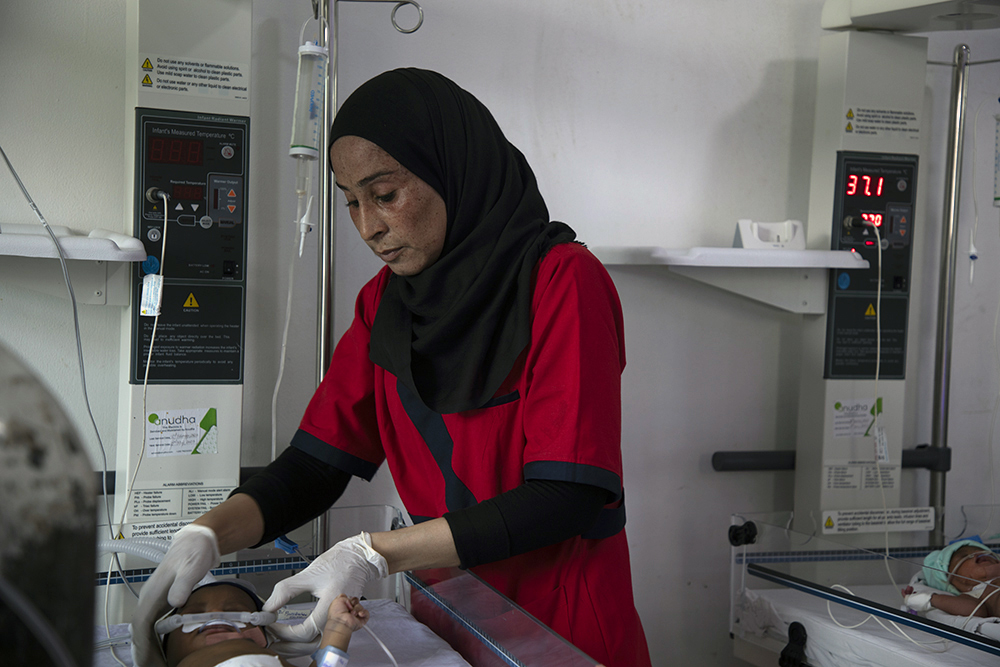
The science has existed for years. The challenge has been making it work where the burden is greatest. Bubble Continuous Positive Airway Pressure, or bCPAP, is one of the simplest and most effective ways of supporting premature babies with respiratory distress. By delivering gentle air pressure through soft nasal prongs, it keeps tiny lungs open without the need for invasive mechanical ventilation.
But respiratory support is not simply a matter of giving a baby more oxygen. Too much oxygen can itself cause harm. In premature newborns, excessive oxygen exposure can damage the lungs and eyes, with the risk of lasting damage.
Dr Thomas Burke, President and Co-Founder of Vayu Global Health, has spent decades working on this problem. “Just like any other drug, too much oxygen can actually kill us,” he says. “Excessive oxygen in early life can damage the lungs and eyes, causing lifelong breathing problems and, in severe cases, blindness.”
That is part of what makes a simple system such as bCPAP so significant. It allows clinicians to provide non-invasive respiratory support while adjusting the flow of oxygen to the baby’s needs – without relying on electricity or compressed air.
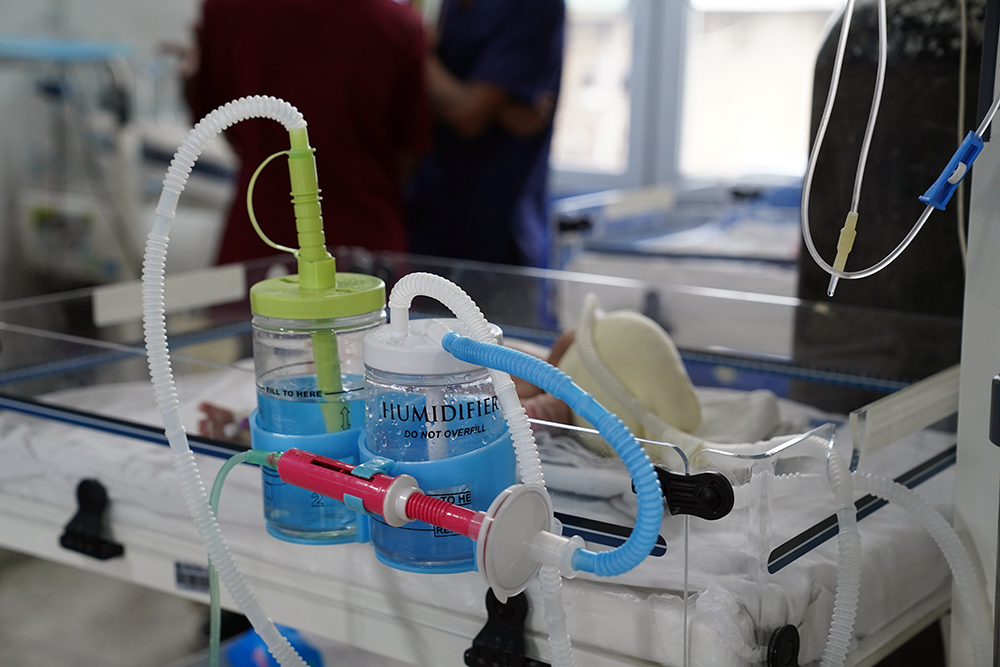
In India, before reliable bCPAP became available, neonatal teams improvised.
“We would use nasal prongs with one end dipped in water to create a form of CPAP,” recalls Dr. Shalini S R., a paediatrician working at Mysore Medical College in Mysore, India.
But the improvised system came with significant limitations. Clinicians could not know precisely how much oxygen or airway pressure they were delivering or adjust those levels reliably as a baby’s condition changed. If the baby’s breathing worsened, the next step was intubation and mechanical ventilation – if a ventilator was available.
Today, Dr. Shalini says reliable bCPAP has changed both what clinicians can provide and how early they can provide it.
"Introducing bCPAP has allowed us to intervene earlier and more consistently, which has reduced the need for escalation in some cases," she says. "Care has become more structured and predictable."
She has also seen quicker improvement in babies, fewer injuries and adverse events, and easier troubleshooting. Staff confidence has grown as teams have become more comfortable initiating and monitoring non-invasive respiratory support.
The practical advantages matter too. “BCPAP is feasible in our setting because it doesn’t require electricity or compressed air, is easy to assemble, and is relatively affordable,” she explains. The simplicity means staff can be trained quickly and treatment can begin without waiting for specialised personnel.
The challenges have not disappeared. Supplies of consumables such as nasal prongs can be unreliable, staff need ongoing training as teams change, and monitoring can be difficult during busy shifts. But bCPAP is now routinely used for babies with respiratory distress in Dr. Shalini’s unit and is well incorporated into the system.
Thousands of kilometres away in Brazil, Lia Brasil, a neonatal respiratory physiotherapist at the Federal University of Rio de Janeiro, describes a different challenge.
“Brazil is a continental country,” she says. “In smaller towns and remote regions there is a real lack of respiratory support for newborns.”
Even relatively well-equipped hospitals can struggle with ageing equipment and have had to make difficult compromises.
“We had about 16 ventilators, but many were very old and outdated. We had to save the best ventilators for the most severe cases.”
For years, mechanical ventilation remained the default. “We did have two bCPAP devices, but we preferred to use mechanical ventilators,” she recalls. “We didn’t yet understand how vital bCPAP could be.”
That changed as experience grew.
“Through the years we learned more about bCPAP, we bought more devices and it became our first choice for respiratory support. It is much more cost-effective and simpler than other modalities, and it fits very well with the reality of Brazil.”
Perhaps most importantly, clinicians began using respiratory support earlier – even in the delivery room.
“Once we started using the devices very early, we could keep many babies off mechanical ventilation,” she says. “And we also saw that our babies were doing better.”
The lesson emerging across very different countries was clear: innovation succeeds when it is designed around the conditions in which care is delivered.
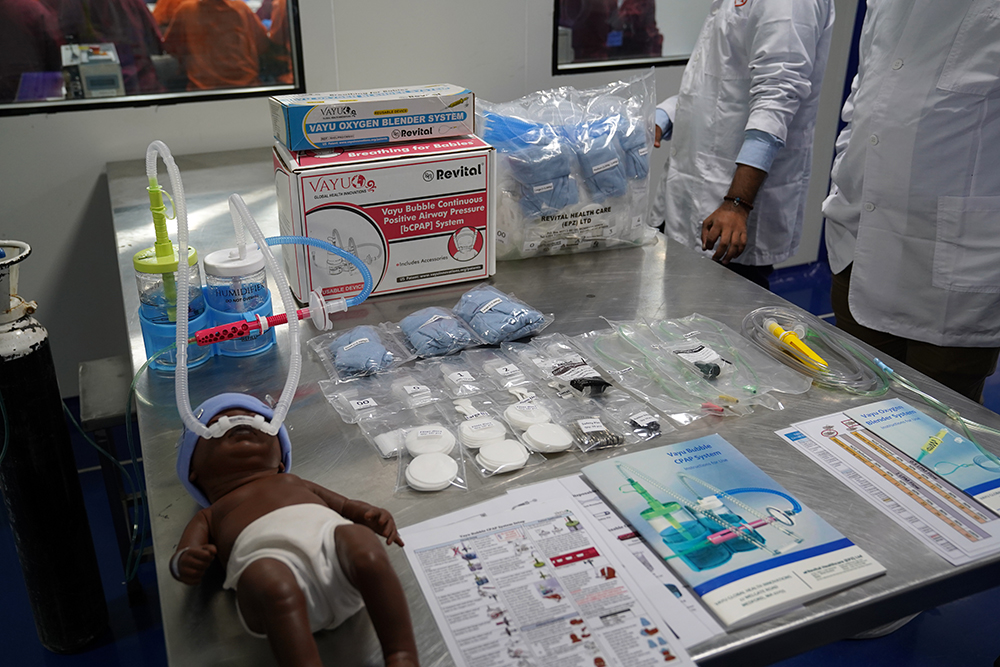
That philosophy shaped the work of Vayu Global Health, whose bCPAP system was developed specifically for hospitals facing unreliable electricity, unstable oxygen supplies, limited technical support and chronic shortages of specialist staff.
Turning that engineering breakthrough into a tool used routinely in hospitals, however, required something more than good design. It required investment.
With support from Unitaid, Vayu was able to move from hand-built prototypes to large-scale manufacturing, clinical evaluation and deployment across multiple countries – helping bring a technology designed for challenging environments into routine neonatal care where it was needed most.
“What Unitaid made possible was the leap from invention to access,” says Dr. Thomas Burke, President and Co-Founder of Vayu Global Health. “We had spent years solving the engineering challenge. Their support allowed us to move from hand-built prototypes to scale, manufacturing and the possibility of reaching babies worldwide.”
For the Kenyan clinicians who had once been forced to ration respiratory support, the impact was immediate. Clinicians no longer waited until babies were critically ill before intervening.
"We started seeing smaller and smaller babies survive," says Dr. Muchela.
One patient in particular stays with her. A woman who had previously lost eight babies arrived in labor with her ninth child. The baby was born prematurely at 32 weeks, struggling to breathe, and the neonatal team started bCPAP immediately after delivery.
Two years later, she returned carrying a healthy toddler.
The staff also changed the way they worked. Nurses, trainees and interns were trained to begin respiratory support immediately because every hour mattered.
“If you don’t start early,” Dr. Muchela says, “the baby just ends up dying.”
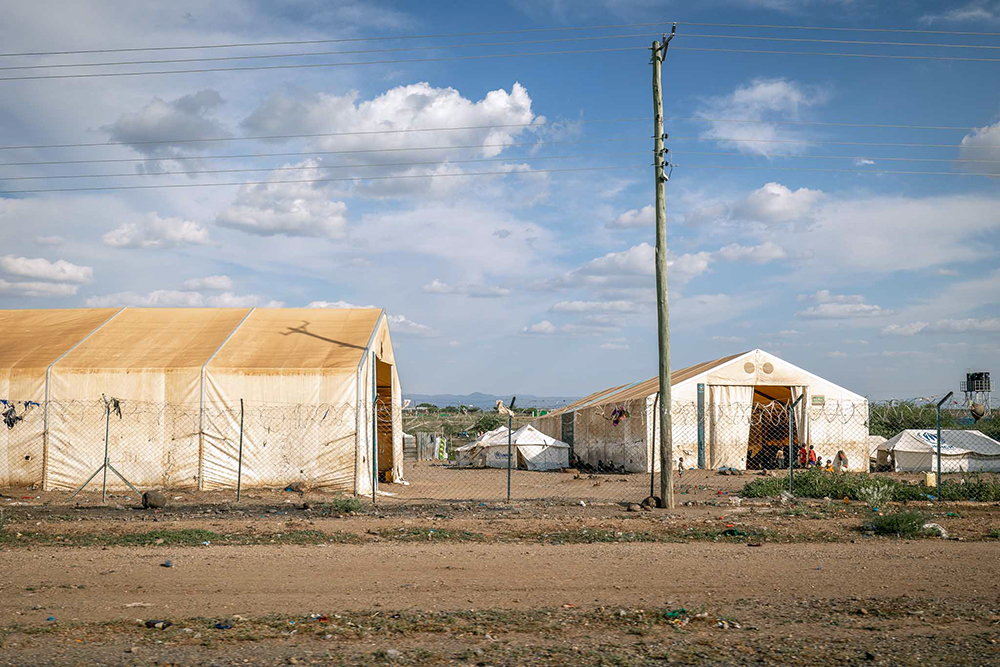
In Ukraine, the challenge is even more stark: sometimes the entire infrastructure needed to provide respiratory support can disappear within minutes, with attacks on civilian infrastructure transforming routine neonatal care into emergency medicine.

“During air raids, babies are forced to move to bomb shelters and we take the Vayu-bCPAP systems down there,” says Dr. Tatiana Nalizhyta, Director of Neonatology at Vinnytsia Regional Perinatal Center.
Conventional respiratory support depends on reliable electricity, compressed air and stable hospital infrastructure – conditions that cannot always be guaranteed during war.
“The use of Vayu-bCPAP does not require electricity,” she explains. “Without respiratory support, the condition of children deteriorates rapidly. All previous successes can be nullified within hours.”
She remembers one newborn who required breathing support just as a city-wide blackout followed an attack on critical infrastructure.
“He was lucky that we had the device,” she says. “He recovered very quickly.”
The science of neonatal respiratory support is not new. The challenge is making it available when and where it is needed – when electricity fails, oxygen is scarce, hospitals are understaffed, distances are vast or war forces clinicians and newborns into bomb shelters.
For the doctors and nurses caring for the world’s smallest patients, progress is ultimately measured very simply: by not having to decide which baby gets the chance to breathe.
Donor acknowledgement: Unitaid’s work to expand access to bCPAP and other essential respiratory care solutions in humanitarian settings is made possible through contributions from the Government of Japan and additional support from Brazil, Chile, France, the Gates Foundation, Norway, Portugal, the Republic of Korea, Spain and the United Kingdom.