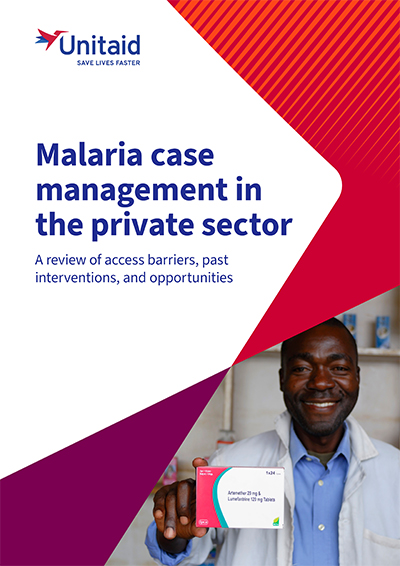
Across malaria-endemic countries, one in three people with a fever – often the first symptom of malaria – seek care from private health providers, including local pharmacies, drug shops, and informal retailers. These providers play a critical role in reaching patients, particularly in underserved communities, yet most operate outside of national health systems, creating major blind spots in treatment data, quality oversight, and surveillance.
A new analysis commissioned by Unitaid highlights critical gaps in private sector malaria care and sets out recommendations to strengthen integration into national health systems and improve quality of services.
"We cannot ignore the reality of where people seek care," said Jan Kolaczinski, Senior Technical Manager for malaria at Unitaid. "When one in three suspected malaria cases go to private providers, the question is not whether to engage them, but how to ensure they can deliver quality care. Private sector integration into national malaria strategies is essential to closing quality gaps and strengthening the overall malaria response in particular when it comes to successful implementation of multiple first line therapies to manage antimalarial drug resistance."
Fragmented private sector creates quality gaps and surveillance blind spots
Experience across malaria-endemic countries shows that fragmented, short-term approaches to engage private sector providers have limited impact on quality and sustainability. Private providers often lack consistent access to affordable, quality-assured diagnostic tests and antimalarial medicines. They have limited training, and cheaper medicines of uncertain quality – including substandard or falsified products – can dominate the market. Because these providers are not connected to government health systems, national programs are unable to track whether treatments are working or identify emerging threats such as drug resistance.
Past initiatives show both the potential and the limits of current approaches. Subsidy programs have expanded access to quality-assured medicines, but gains have not always lasted when funding ended. Training and accreditation initiatives have also shown promise, but have struggled to achieve scale when implemented as standalone interventions.
Sustainable integration requires system-level investment
The report calls for a fundamental shift from fragmented, donor-driven projects to systems-level investments that embed private providers within national malaria responses. This means connecting private sector data to national monitoring systems so governments can track treatment outcomes, detect risks early, and provide targeted support to improve care.
Working with private providers to shape service standards can help ensure that quality improvements are practical and scalable. Solutions must also be adapted to local contexts, reflecting the diversity of providers across different settings.
Integrating private providers into the rollout of innovations, such as multiple first-line therapies to reduce the risk of antimalarial resistance, will be critical to sustaining treatment effectiveness and maintaining progress towards malaria elimination. Strengthening quality in the private sector is therefore central to protecting the tools available to manage malaria, particularly as financial pressures intensify and the threat of drug resistance grows.
This landscape report provides a review of past experience and potential opportunities for governments, partners and donors to move from isolated interventions toward sustainable, integrated approaches that strengthen the overall malaria response.