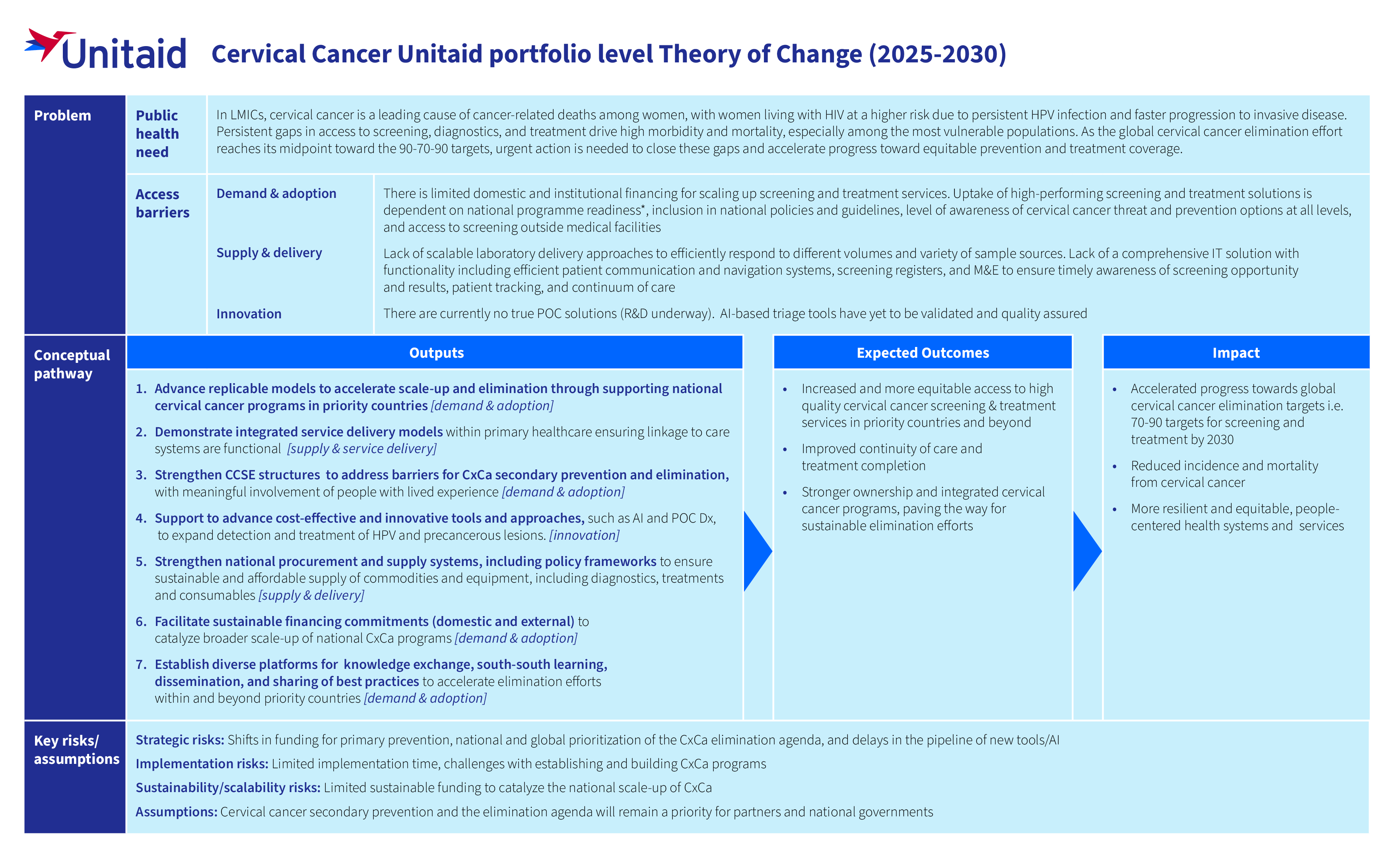
Cervical cancer is one of the most common cancers among women worldwide, claiming over 350,000 lives in 2024. Although cervical cancer is both preventable and curable when detected early and managed effectively, screening and treatment coverage in low- and middle-income countries (LMICs) remains far below what is needed to achieve global elimination targets. These disparities reflect a persistent equity gap in which women most at risk have the least access to high-quality cervical cancer screening, diagnostic, and treatment tools. Limited access to lifesaving tools and approaches means that 90% of new cervical cancer cases and deaths worldwide occurred in LMICs, and 19 of the 20 highest-burden countries are in Africa. Women living with HIV are at particularly high risk, facing a six-fold greater likelihood of developing cervical cancer compared to the general population. Expanding access to effective cervical cancer screening, diagnostic, and treatment tools is essential to closing this equity gap, ensuring that women in the highest-burden settings can benefit from the same lifesaving technologies available elsewhere
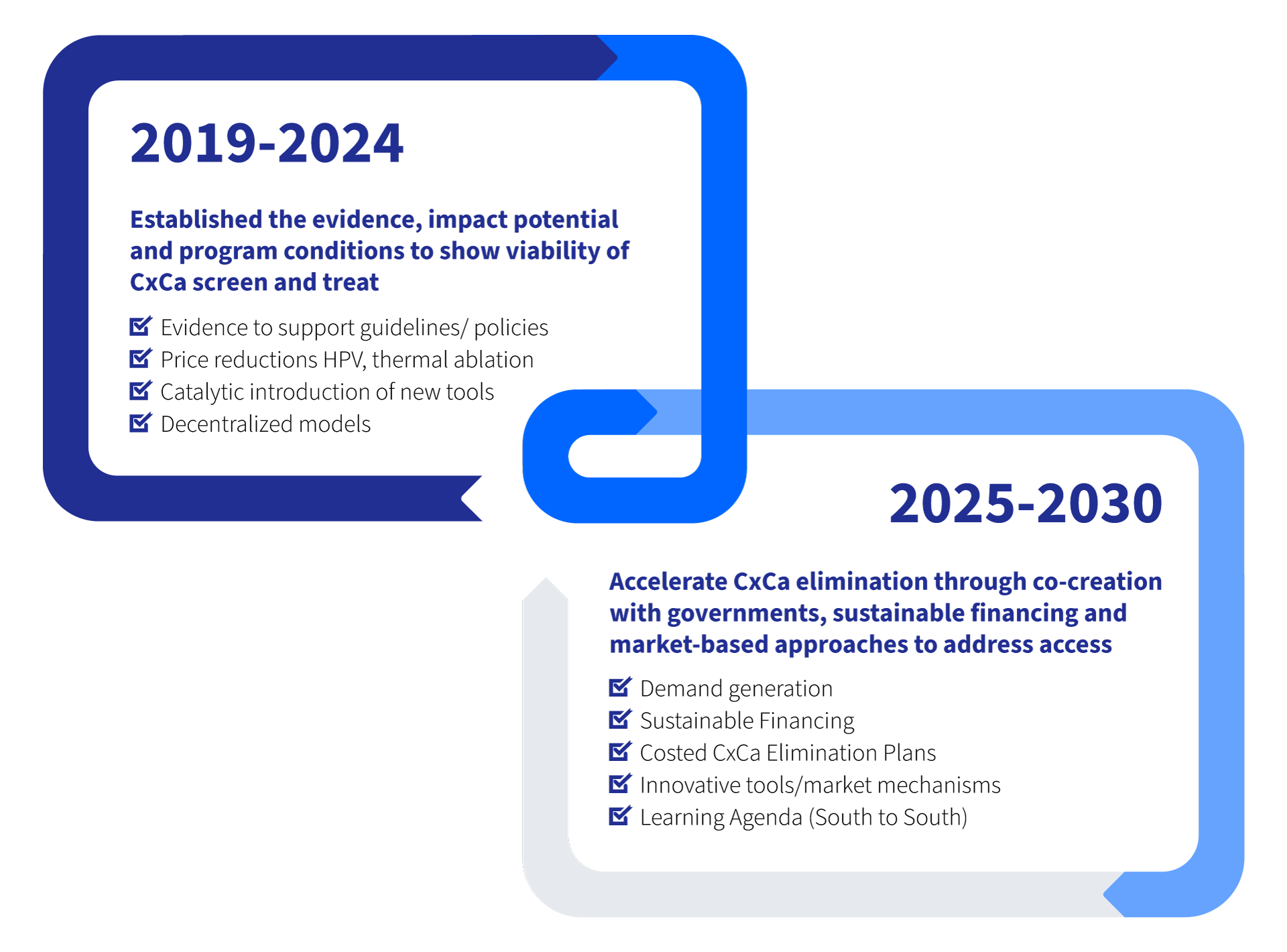
Unitaid’s work on cervical cancer builds on its broader commitment to advancing women’s health across the life course. From adolescence through reproductive years and into later life, women face interconnected health needs. Unitaid’s investments aim to strengthen this continuum, supporting access to essential health products, promoting integrated service delivery, and addressing the systemic barriers that prevent women and girls from receiving timely, high‑quality care. Cervical cancer prevention and treatment form a critical pillar of this wider effort to ensure that women, in all their diversity, can live healthy, empowered lives. Since 2019, Unitaid has been a driving force in transforming secondary prevention of cervical cancer: catalyzing the introduction and integration of essential health products such as HPV testing, self-sampling methods, and thermal ablation devices, and spearheading the development of innovative, AI-enhanced visual evaluation tools. Through its strategic investments and global partnerships, Unitaid has established itself as a champion for equitable access to cervical cancer technologies and services. Working with implementing partners and ministries of health, Unitaid achieved:
- Programmatic reach: cervical cancer programs established in over 14 countries, reaching more than 1.6 million women across three continents, and expanded coverage to 26 countries across three regions.
- Technology deployment: Thermal ablation devices introduced in one-fifth of all LMICs, stabilizing supply and improving affordability.
- Cost reductions: Prices reduced by up to 40% for HPV tests and 45% for thermal ablation devices.
- Sustainable financing: Interventions co-created with national governments, enabling the integration of cervical cancer prevention and treatment into national health and financing strategies.
Building on these achievements, the next phase of work aims to move from demonstrating the viability of tools and programmes to sustainable integration into routine services, ensuring scalable delivery aligned with elimination targets, resilient to declining external funding and competing health priorities. Unitaid’s next investments will catalyze further impact, creating broader opportunities to save lives, reduce inequities, and strengthen health systems.
Timing is critical. With many countries at a pivotal moment aiming to meet the 2030 elimination targets, this investment aims to shift from small-scale initiatives to sustainable, nationally owned cervical cancer programs delivered at scale to reach 2030 elimination targets. Furthermore, evidence shows that climate change is affecting women’s health by disrupting access to prevention and care. As countries work toward global CxCa elimination targets, programs will need resilient and increasingly decentralized systems. Strengthening the resilience of supply chains and service delivery is therefore essential to maintain screening, diagnosis, and treatment, and to ensure equitable access for women and girls in vulnerable and underserved communities.
WHO’s Global Investment Case for Cervical Cancer Elimination suggests that investment in cervical cancer elimination offers a compelling return: every US$1 invested could yield up to US$26 in economic gains by 2050, including broader societal benefits. These benefits include health-care savings, productivity gains, and broader social and economic contributions from women who avoid premature illness and death.
With this new funding opportunity, Unitaid seeks to enable affordable, high-impact secondary prevention interventions that strengthen and complement national cervical cancer elimination strategies and rollout plans. The focus is on enabling countries to implement routine, integrated services, strengthen supply and delivery systems while adopting innovative approaches that promote scale-up, sustainability and cost efficiency. Proposals should demonstrate alignment with national priorities, promote equity and long-term sustainability, and generate actionable evidence to catalyze global cervical cancer elimination.
The objective of this Call for Proposals is to:
Introduce and scale innovative tools and approaches—including next-generation HPV diagnostics, digital health solutions, and cost-optimized delivery models—that improve efficiency, equity, coverage and quality of care across the care continuum.
Accelerate demand and adoption of cervical cancer secondary prevention and treatment services by supporting national and large subnational programs that are ready to establish routine, integrated services aligned with the global elimination strategy.
Promote equity, engagement of communities and women with lived experiences, and strong governance to ensure that interventions reach underserved populations, foster local relevance and ownership, and align with national strategies for long-term sustainability.
Strengthen supply and delivery systems to ensure sustainable, transparent, and efficient supply, procurement and distribution of cervical cancer commodities, embedded within broader women’s health and essential medicines supply chains.