
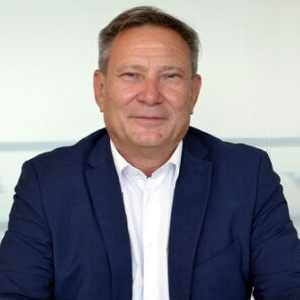
As we enter a new year marked by uncertainty and change, I am reminded that many of the greatest advances in global health have come at moments when progress seemed far from assured. Unitaid was founded at such a moment 20 years ago, when science and innovation were outpacing access and scale, hindering the progress promised to us by medical advances and leaving millions of people in need without access to the latest health tools.
Equitable access to medicines and other health technologies has been a common thread that has underpinned my career in health. When I began work as a young doctor in Paris, the HIV epidemic was surging in France, as it was in other parts of the world. I still remember learning of new antiretroviral medicines at a time when we had few effective tools at our disposal to care for our patients. That duality of hope and desperation remains with me today – the experience of waiting to access promising new treatments while patients deteriorated and some died, because of high prices or unavailable tools.
For me, the seeds of what would eventually become Unitaid were planted then. Working with colleagues in Paris, I was closely involved in engagements with the pharmaceutical industry – using what were, at the time, emerging negotiation practices using estimated volumes, market predictability and other approaches that we would later harness to achieve major advances in global health in the decades following. Together, these efforts helped bring down the cost of those new medicines while also improving the predictability of their access. It was an example of what the power of coordinated action could achieve.
Unitaid was founded at a time when the countries hardest hit by the AIDS epidemic still lacked access to the medicines that were turning the tide in higher income countries. Tuberculosis (TB) – an enduring yet long-neglected epidemic reignited by the HIV outbreak – was raging, yet diagnosis and treatment remained insufficient, and decades of neglect had left children exposed to the deadly disease.
Meanwhile, malaria was surging, often causing multiple bouts of life-threatening illness in many children and other at-risk populations each year, interrupting education and livelihoods in addition to the severe physical consequences.
From these converging health crises, came an innovative solution. Unitaid was created to intervene differently to traditional aid – to ensure new products were affordable, available and adapted to people in the low- and middle-income countries who most needed them. This lean, agile mechanism could invest to stress-test interventions and lay the groundwork for larger agencies tasked with large-scale roll-out, helping the entire sector to save time and resources.
And I’m proud to see the proof of that theory 20 years on. We have demonstrated how smart, targeted investments – including in intellectual property approaches and voluntary licensing principles that would give rise to the Medicines Patent Pool – can bring down costs and dramatically increase access to transformative innovations. These advances are reshaping the HIV response, improving TB diagnosis and treatment and fighting malaria resistance – while ensuring children are not left behind in any of these efforts. Our collaborative approach – involving parties from industry to community advocates – brings excellent returns, both health and economic.
Now, we are entering a new era in global health. One that – I hope – will be defined by greater health sovereignty and a shift towards efficiency and sustainability.
Recent pandemics such as COVID-19 and Mpox have exposed weaknesses in our global health model and underscored the urgency of health systems that can respond to multiple needs at once. This is accelerating a shift towards greater integration of services into primary health care, such as those that leverage existing maternal health platforms to improve care for entire families. At the same time, the growing importance of regional manufacturing and the impacts of climate change are reshaping how countries think about sustainable access to health products.
In this context, Unitaid has a critical role to play, to support low- and middle-income country stakeholders to achieve more with the limited resources available to them, supporting the transition to greater country ownership. This is just one part of a complex solution, but to go without it would be to paint the house before we’ve built the walls.
Unitaid creates and catalyzes access to global goods available for those most in need. With less than one percent of total global health funding, our work is projected to generate more than US$10 billion in savings by 2030 – demonstrating what is possible when resources are deployed strategically, with a clear focus on sustainability and scale-up.
Twenty years on, the lesson is clear to me. Progress does not come from innovation alone, but from the deliberate choices we make to ensure that innovation is affordable, accessible and adapted to the realities of people’s lives.
As I approach the end of my time at Unitaid later this year, I am struck by how enduring the organization’s founding mission remains. The past 20 years have been a collective journey and the access interventions we have built are shared successes, made possible through strong partnerships across the global health community. Though the challenges have evolved, the need for equity-driven catalytic investment to accelerate access to medicines, tests and preventive treatments has not. If the past 20 years have taught us anything, it’s that even in uncertain times, smart, principled action can change the course of global health – and people’s lives.
Let us continue to act with ambition and purpose, and transform what may seem impossible into possible and positive change.